How Do You Restore Doors and Trim With Decades of Paint Buildup?
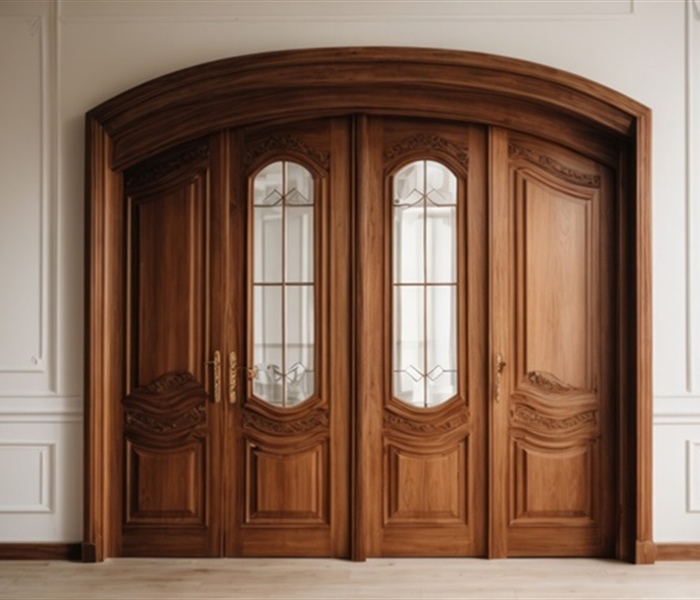
Restoring historic doors and trim that have accumulated decades of paint is a technical process rooted in material science, craftsmanship, and restraint. Older homes often contain millwork made from slow-growth lumber with sharp profiles that were never designed to be buried under repeated repainting cycles. Over time, paint buildup obscures details, alters proportions, and can trap moisture against the wood surface. Addressing this properly requires understanding how paint layers behave, how wood responds beneath them, and how original details can be recovered without loss.
The process involves careful evaluation before any removal begins. Paint thickness, profile depth, joinery condition, and wood species all affect the restoration approach. This article examines how much paint trim can tolerate before detail loss occurs, which removal methods protect carved designs, how to assess structural integrity beneath paint, what finishing steps return clean lines, and when off-site restoration is the safer option. Fulton Revivals approaches this type of work with methods grounded in preservation standards rather than shortcuts, similar to the care required in professional interior painting projects where surface preparation defines the final result.
How Many Layers of Paint Trim Can Hold Before Detail Is Lost
Architectural trim begins to lose visible detail well before structural damage occurs. In most historic homes, profile softening becomes noticeable once paint buildup exceeds approximately 20–30 mils in thickness, which often corresponds to six to ten repainting cycles using standard architectural coatings. Each successive layer rounds edges, fills shadow lines, and reduces contrast between raised and recessed areas, making originally crisp profiles appear flat.
Oil-based paints used prior to the mid-20th century contribute heavily to this issue. These coatings cure harder than modern latex paints and tend to bridge corners and crevices rather than flow out evenly. When later latex layers are applied over them without full removal, the combined film builds unevenly. This is why crown molding, window casings, and door panels often show disproportionate loss of detail along edges rather than across flat fields.
Once detail loss reaches the point where paint occupies more volume than the original profile recess, removal becomes restorative rather than cosmetic. At this stage, controlled paint removal is necessary to recover the original geometry before any new finish work, a standard approach used in preservation-focused interior painting projects.
Paint Removal Methods That Preserve Carved and Routed Designs
Preserving carved or routed details requires removal methods that soften or release paint without eroding the wood substrate. Chemical strippers with extended dwell times are commonly used because they break the bond between paint layers while leaving the underlying wood fibers intact. These formulations are applied in thick coats and removed mechanically with plastic or wooden tools rather than metal scrapers.
Infrared heat systems are another preservation-grade method. Unlike open-flame or high-temperature heat guns, infrared tools heat paint from the substrate outward at lower temperatures, reducing the risk of scorching wood or volatilizing lead-based coatings. This allows paint to be lifted in sheets, often revealing original tool marks that abrasive methods would destroy.
Mechanical sanding is intentionally avoided on carved trim until paint layers have already been reduced. Abrasives remove material indiscriminately and can permanently alter profiles, especially on softwoods commonly used in early 20th-century interiors. Preservation standards prioritize reversible, low-impact methods for this reason.
Assessing Structural Integrity Beneath Thick Paint Layers
Thick paint can conceal serious structural issues, including rot, insect damage, failed joints, and moisture intrusion. Assessment begins with targeted paint removal in discreet test areas to expose bare wood at joints, corners, and horizontal surfaces where deterioration most often begins. These exposures allow direct inspection without committing to full removal prematurely.
Wood hardness testing is commonly used once surfaces are exposed. Awls or probes are pressed into the grain to identify softened fibers indicative of rot. Sound testing, where surfaces are lightly tapped and listened to for tonal changes, helps identify hollowed areas caused by insects or internal decay. These techniques provide reliable data without invasive demolition.
Moisture meters are also employed to confirm whether deterioration is historical or active. Paint buildup can trap moisture against wood, accelerating decay even when the surface appears intact. Identifying moisture content levels guides whether restoration alone is sufficient or if repairs must precede refinishing.
Finishing Steps That Restore Crisp, Clean Lines
Once paint removal and repairs are complete, restoring sharp detail depends on disciplined finishing techniques rather than heavy coatings. Surfaces are first neutralized and cleaned to remove residual stripping agents, then lightly sanded with fine-grit abrasives to refine transitions without altering profiles. This step restores tactile clarity to edges and contours.
Primers are selected based on wood species and exposure conditions. High-build primers are avoided on detailed trim because they can reintroduce profile loss. Instead, penetrating or bonding primers are applied in thin coats to seal the surface while preserving geometry. Each coat is sanded lightly to maintain crisp lines.
Finish coats are applied with controlled methods such as fine-bristle brushing or spraying where appropriate, ensuring paint flows evenly without pooling in recesses. The objective is to protect the wood and highlight original craftsmanship rather than mask it.
Situations Where Off-Site Trim Restoration Is Safer
Off-site restoration is preferred when trim elements are heavily damaged, contaminated with lead-based paint, or too intricate to treat safely in place. Removing components such as door casings, baseboards, or window surrounds allows for controlled environmental conditions, specialized equipment, and longer dwell times for chemical treatments.
Shop-based restoration also enables comprehensive repairs that are impractical on site, including clamping failed joints, consolidating degraded wood fibers, and recreating missing profile sections with precision milling. These processes require stability and access that residential interiors rarely provide.
In cases involving occupied homes, off-site work reduces exposure risks and minimizes disruption. Once restored, trim is reinstalled, sealed, and finished to integrate seamlessly with surrounding surfaces.
Professional Restoration Support
Restoring doors and trim with decades of paint buildup requires technical judgment at every stage, from initial evaluation through final finishing. Serving Chicago and the surrounding suburbs, Fulton Revivals applies preservation-based methods to interior woodwork, balancing material integrity with accurate surface restoration for both historic and modern properties.
Fulton Revivals provides expert guidance for homeowners navigating paint removal, surface repair, and long-term finish performance. To discuss a project or request an evaluation, call 630-615-1283 or connect with their team through their online contact page.